Recent Jury Box Blog Entries

Subscribe to The Jury Box Blog

Showing posts with label peremptory challenges. Show all posts

Tuesday, April 10, 2012

What's brewing with Tea Party Jurors?

But What About my Needs?

Back in the fall, I was running focus group research in an undisclosed location, in preparation for an undisclosed case, scheduled for an undisclosed trial date. (See how I did that? I just made my completely mundane case seem much more interesting by refusing to tell you anything about it.) Truth be told, the case details are irrelevant for the purposes of this post, except for the fact that it involves a consumer protection dispute.

I always have my focus group participants complete an extensive written questionnaire before the study begins. Think of the supplemental juror questionnaire (SJQ) you'd use if you were arguing your case before a really enlightened, curious and slightly whimsical judge. It's kind of like that. The general information section contains pretty standard stuff about occupation and home ownership, mixed in with the usual pot porri of inquiries about tattoos and home schooling.

As I was finishing up the questions for this section, I noticed I had some white space before the next section on "Experience with the Legal System," so I decided to add another question. "What do you think of the Tea Party Movement?" Mostly, I was curious about what people would be willing to write down about something that had engendered so much anger, confusion, frustration and passion in the general public.

I consider myself a pretty astute student of politics. I did teach in the Government Department at Harvard for ten years. I watch the Daily Show every night. I have RealPolitics.com bookmarked on my browser. But I have to admit that the Tea Party Movement has me stumped. It is easy to be really cynical about this group, blanketing them with a categorical label of "Angry Whackos." Such a characterization, however, would be dismissive of the very real appeal that the movement has for a lot of people. There has to be a "there" there; or, at least something that actually unites the people who identify themselves as Tea Party supporters.

From a professional perspective, it is even more important for us to get a handle on what is driving the decision-making of Tea Party sympathizers. Tea Partiers are active in politics. They register to vote and go to rallies, so we should expect them to show up for jury duty when summoned.

This begs the question: What will Tea Partiers do in the jury box?

Hell hath no fury like a Tea Partier Scorned

On the surface, a typical tea party juror looks pretty good for the defense. They tend to believe in personal responsibility. They are more likely than your average respondent to think that there is a torts crisis and that frivolous law suits pose a real problem. Tea Partiers object to many entitlement programs and believe that too many Americans expect a free hand-out at every turn.

At our study in October, we had one such participant. Let's call her Sally (not her real name). In response to the Tea Party question, Sally had written, "Actually, I think they're great!" During an early part of the study, when I had the moderator pose hypothetical scenarios to the group, to see how they perceived situations similar to what we faced at trial, Sally rolled her eyes at one point, saying, "Oh, she'll probably pick up the phone and call her lawyer. That's what's wrong with America. Everyone immediately thinks about suing somebody when anything goes wrong." At this point, Sally sure seemed like a good defense juror.

The problem with the Tea Party paradigm, however, is its profound inconsistency and hypocrisy. What seems to unite Tea Party supporters is a profound lack of empathy for people unlike themselves, along with an almost hysterical need to have their own grievances heard and attended to. As such, when contemplating a Tea Party supporter as a juror, it is absolutely critical to gather a great deal of information about that person's life to make sure that your case doesn't push any of their hot buttons.

Turns out Sally had a hot button. WIthout giving away too much about the case, let's say that it involves a relatively minor nuisance which the federal government had seen fit to penalize with extremely high mandatory civil penalties. As such, a thriving cottage industry has popped up of attorneys whose entire practice is to cobble together plaintiffs and sue under this one statute. After spending hours bemoaning the litigiousness of American society, Sally and her fellow respondents were finally introduced to the facts of our little case.

Well, wouldn't you know it, Sally had actually experienced the same problem as the plaintiffs in our case. Ironically, Sally had hired one of the companies who had inconvenienced her in violation of the statute and had been quite pleased with their work. Despite her prior rantings against suing in similar circumstances, and chiding from fellow respondents about the inconsistency of her position, Sally wanted to hang the defendants by their thumbs and drive them out of business. Sally constructed an entire fantasy about exactly how the defendant company operated, in order to justify her position that they, unlike the companies in the hypotheticals she had just finished discussing, deserved the most punitive treatment available.

Normally, this kind of argument would hold little sway with other jurors. The problem we faced in this case is that no-one else on the panel had any personal experience with the circumstances surrounding the case. So, while most subjects could easily dismiss Sally's arguments as convoluted, several were willing to defer to her on the grounds that she had relevant experience they did not. That is, Sally was a self-professed expert and that was enough for them.

Tea for Two

I found my experience with Sally profoundly troubling. Many commentators have discussed the erosion of empathy, civil discourse and reason-based argument in America over the past fifteen years. Clearly, this transition was manifesting itself in jury rooms, as well as campaign trails and voting booths. So, my Tea Party question became standard for all of my jury research. Just a simple question, "What do you think of the Tea Party movement?"

Just this past month, I ran a multi-panel focus group study for a case involving one of Boston's many universities. Again, without going into details about the case, I will divulge that the main witness for the defense was a very smart professor at the university. What makes this case potentially problematic, from a defense perspective, is that it is quite complicated and involves inner workings of a university with which most jurors will be quite unfamiliar. As such, the defense team wanted to make sure it could do a good job of getting jurors to actually understand how things work and who has responsibility for what.

We presented our treatment to the respondents and were pleased to see that, for the most part, they "got it." That is, we had done a good job of conveying a lot of esoteric and complicated information in a way that ordinary people could understand. As it turned out, however, we weren't out of the woods. There were two respondents who had decided that the university was not only wrong, but also evil and malicious. One of them wanted the university officials to be criminally prosecuted.

Reviewing their initial questionnaires, I didn't find any real red flags. They both have degrees from local colleges, although not particularly good ones. One is a payroll manager and the other is a "self-employed" ticket broker and "public speaker." The payroll manager, however, answered the Tea Party question, "They have some important ideas." I decided to dig a little deeper.

Both of these respondents listed Fox News as a major source for news coverage. They also both read The Herald, and not The Globe. In addition, our ticket broker is from Revere and the payroll manager is from Winthrop. These are two blue-collar, mostly white, communities north of Boston. They are also the only two towns in Suffolk County that went for Scott Brown in his Senatorial contest with MA Attorney General Martha Coakley. While Ms. Coakley won 70% of the vote in Boston, she won 46% and 44% in Revere and Winthrop, respectively. Confirming Senator Brown's appeal among blue-collar white voters, the only parts of Boston he won were South Boston, West Roxbury and the majority white neighborhoods of Dorchester.

One mainstay of the Tea Party movement and the Fox News propaganda is a rabid anti-intellectualism. They regularly vilify East Coast Liberal Elites and preach adherence to faith over science. Followers of this dogma are trained to be inherently suspicious of major research universities. Such universities are the homes of those perpetrating the global warming hoax and foisting evolution on unsuspecting school children who should be taught only creationism. In short, a professor at a major Boston university is immediately and automatically suspect, regardless of what he or she has to say.

Always Dig Deeper

In addition to asking about preferred sources for news, I ask respondents to tell me about social media usage. Our ticket broker has a Twitter account. He doesn't tweet much, but he did post extremely religious messages on Christmas. He follows both Scott Brown and Fox News on Twitter. In short, he is a Christian Conservative living within a stone's throw of Boston.

There were fewer overt signs of political preference for our payroll manager. I did, however, pull up her LinkedIn profile. After many years at the same company, she changed jobs last June. She lasted only six months at the new company and only found work at a third firm after a few months without a job. While we will never know exactly what happened that caused her to leave her new job after such a short stint, it is not hard to imagine that she had some sort of negative experience working there. Because Tea Party sympathizers weight so heavily their own experiences and concerns, her extreme negative reaction to our case might have been triggered by her own lingering hostility towards her last employer. They are a big corporation and a university is a big corporation.

Our ticket broker is obviously struggling to make ends meet. He has a college degree and thinks of himself as very intelligent and articulate. He would raise his voice to be heard and was the one participant who regularly cut people off or spoke over them. He had all the characteristics of an inferiority complex and could reliably be counted on to disparage the testimony of some fancy-pants professor.

Handling Tea Partiers During Voir Dire

If you practice in a jurisdiction with real attorney-conducted voir dire and/or regular use of supplemental juror questionnaires, you can probably tease out the tea party supporters. You can ask them questions about their experiences and make sure they have no negative associations with the topic of your case.

Life is much trickier in a jurisdiction with limited voir dire. Standard practice in Massachusetts, for example, is for the judge to ask all the questions, with limited input on question content from the attorneys. The main round of questioning is done as a group in open court, so all of the questions must be phrased to accommodate yes or no answers. The judge decides how deeply to dig into any topics at sidebar for any subsequent individualized voir dire and the lawyers are not permitted to speak directly to any of the prospective jurors.

One byproduct of this arrangement is that judges typically ask extremely direct and pointed questions, but not ones that a student of juror psychology would suggest. A Massachusetts judge would never ask a prospective juror about her views on the Tea Party unless the case were specifically about something a Tea Party leader had done. So, in a world of limited voir dire, it is very difficult to explore these tracers for attitudinal tendencies. And, without attorney-conducted voir dire, it is pretty much impossible to get information about attitudes directly. In short, we're screwed.

In the case involving the local university, we will try to use the demographic information to our advantage. We will keep an eye out for blue collar, white jurors, without major university credentials, from pro-Scott Brown communities. This is, unfortunately, a third-order proxy for what we really want to know about these people, but it is the best we can do in such a low information environment.

My main advice for anyone facing the prospect of Tea Party followers in the jury pool is to be extremely careful to identify them and gather as much information as possible. My experience is that such individuals can be unpredictable and capricious. Equally important, they like to talk and believe that what they have to say is profoundly important. One characteristic that seems to be shared by many Tea Party adherents is sense that their voice is not being heard by those in power. They are loud, persistent and desperate to be heard. As such, you must anticipate that a tea party juror will be an active juror, a persistent juror, and an incalcitrant juror. You had better know in advance exactly what they want and what their hot button issues are. If you don't I recommend that you burn a peremptory strike and move along to the next person in the box.


Wednesday, October 26, 2011

Challenging Jury Selection in Tarek Mehanna Trial


Followers of The Jury Box Blog know that I have been following closely the case of Tarek Mehanna, since he was arrested and arraigned nearly two years ago. Mehanna, a pharmacist from Sudbury, MA, is accused of engaging in terrorist activities and "providing material support" for Al Qaeda. In addition to have allegedly attempted (unsuccessfully) to receive jihadist training in Yemen and plan the bombing of an American shopping mall, Mehanna is accused of translating into English and posting to websites hundreds of pro-Al Qaeda documents. His case then presents a very difficult question. Can publishing propaganda be considered "providing material support"? Mehanna's defense team desperately wants to turn this into a First Amendment case, while the prosecution aims to prove that the defendants efforts were all aimed at actually furthering the destructive efforts of a terrorist organization.

Tarek Mehanna
You can review my earlier blog posts about the case here. In addition, I gave a talk about Terror Management Theory at Harvard Law School in September, where I focused in on the challenges presented by the Mehanna case. Finally, as the trial got started this week, I was interviewed by WBZ-TV news (the CBS affiliate in Boston) about the challenges associated with picking a jury in this highly charged case. A brief snippet of that interview can be found in the video embedded in this page.) In previous blog posts, as well as the TV interview, I addressed the fact that the default jury selection rules in federal court are ill-suited to handling the myriad problems of intrinsic bias in this case. Having the judge conduct group voir dire in open court is a recipe for disaster. Judge O'Toole, who is presiding over the case, is not exactly known as an innovator on the bench. 

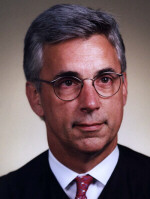
Judge George O'Toole
Jury selection did begin on Monday of this week and we have learned just a few things about how it is proceeding. 

  1. The initial panel of prospective jurors numbered only 60. Given that this could be a two-month trial, this seems to be a really small number. It suggests that the judge is not going to be particularly accommodating with respect to challenges for cause, based either on personal beliefs and experiences, or exposure to pre-trial publicity about the case. 
  2. The group voir dire was pretty much by the book. Everyone was asked a series of yes-or-no questions to which they had to respond affirmatively by raising their hands. Much research on this topic suggests that prospective jurors very often "lie through omission" in this setting, especially with respect to sensitive or controversial topics.
  3. Judge O'Toole did have the good sense to conduct the ensuing individualized voir dire in his chambers. That is, rather than having a prospective juror come up to side-bar for a whispered conversation, with a courtroom full of spectators, fellow jurors and reporters trying to eavesdrop, O'Toole elected to have these conversations in private. Only the judge, a court reporter, the attorneys and the defendant have been permitted into chambers for this part of the voir dire. This should help people feel slightly more comfortable and hopefully forthcoming, as well.
  4. Despite much research that shows that jurors tend to be more open, honest and forthcoming when questioned by attorneys, Judge O'Toole is insisting on conducting the voir dire himself. In addition to the general intimidation factor, this runs the risk of jurors trying to anticipate the "right" answers to his questions, or trying to please him with their responses. 
  5. The other major problem with this judge-conducted voir dire is the insistence of judges to ask the "Can you be fair?" question. "Notwithstanding the fact that you have read 30 or 40 stories about the defendant in the Boston Herald over the past two years, Mr. Smith, do you think you can put aside any opinions you've encountered and be fair?" Research on this shows that people who confidently answer "yes" to such a question consistently exhibit more bias against defendants than people who admit that their exposure to pretrial publicity might have compromised their impartiality. Self-reflective jurors just tend to be more conscientious.
  6. We have learned a few things about what each side has asked to be included in the voir dire questions. Mehanna’s lawyers asked the judge to question prospective jurors about whether they have any family or close personal friends who were directly affected by Sept. 11 and if they attended any memorial service commemorating Sept. 11. This is a reasonable question, given that it is experiential, rather than opinion-based.
  7. The defense also asked for prospective jurors to be questioned about whether evidence that Mehanna greatly admired bin Laden would make it difficult for them to be impartial. This question is poorly worded, in that it asks for a level of self-reflection and self-evaluation unattainable by most people. Responses to such a question just aren't remotely reliable.
  8. Mehanna’s lawyers also want the judge to ask jurors whether they could be impartial after hearing evidence that Mehanna, an American-born Muslim, supported the destruction of the World Trade Center. This question suffers from the maladies as the previous one. The defense team is really in a quandary here because they are forced to phrase questions as yes-or-no and the judge will insist on wording about impartiality.
  9. Prosecutors, meanwhile, focused their proposed questions on attitudes about how some evidence against Mehanna was collected. They asked the judge to question jurors on whether they believe the use of electronic wiretaps is unfair and would make them unable to be impartial in evaluating the evidence against Mehanna. Again, the form of this question is terrible. It would be much better to just ask each prospective juror to talk a little bit about her views on the weighing of civil liberties against national security. Open-ended questions always work much better.
  10. The government also wants the judge to ask if jurors have any “fixed feelings or impressions” about Arabs or Muslims that would make it difficult for them to listen to the evidence with an open mind. My sense is that the only people who will answer in the affirmative here are folks trying to get out of serving.
To sum up then, the decision to hold individual voir dire in chambers should increase the willingness of prospective jurors to be candid and forthcoming. The public may never learn how these interviews have been conducted. I only hope that Judge O'Toole, outside of the media spotlight, will treat this voir dire as an opportunity to have more of a conversation with jurors, rather than peppering them with the traditional barrage of challenging questions.

Attorney John W. Carney, Jr.
Perhaps there is hope, given how upbeat Mehanna's defense attorney, John Carney, was at the end of Tuesday's session. He told reporters, "We're very pleased with the thoroughness with which Judge O'Toole is questioning prospective jurors. We are optimistic that we will get a fair and thoughtful jury in this case."

I wonder if the prosecutor is as sanguine....

Tuesday, April 05, 2011

An Oldie but a Goodie: Tips for Voir Dire

In reviewing the traffic on my website recently, I was struck by how much more often one particular article was accessed than any other. I used to write a column on trial strategy for Lawyers USA (formerly Lawyers Weekly USA), and this particular article on voir dire strategy from 2006 seems to be very popular, even today. So, in the spirit of giving the public what it wants, here is that article in its entirety.

Enjoy!


Indirect Questions Reap Most Information in 
Oral Voir Dire 
By Edward P. Schwartz 
October 9, 2006 

In my last column, I discussed many of the advantages of using a 
supplemental juror questionnaire as part of jury selection – the primary 
advantage being that jurors tend to be more truthful in their responses on a 
written form than they are when questioned orally in open court.  
But the written form – at least in courts that allow traditional voir dire – should 
only be seen as a supplement to oral questioning conducted in both a group and 
an individualized setting.  

Group voir dire 

By necessity, group voir dire questions are typically framed as “yes or no” 
inquiries. Jurors are asked to raise their hands if they answer any question in the 
affirmative. Each party notes who raised a hand in response to each question 
and then follows up with questions either in open court, at sidebar or in the 
judge’s chambers, depending on the court’s prevailing practices. 

My first word of advice is not to expect to learn very much from group voir 
dire. The need to ask “yes or no” questions, coupled with the public setting, 
conspire to limit how much information you can get from potential jurors. The 
studies cited in my last column all reveal that jurors lie during group voir dire – a 
lot. Most of these lies stem from an unwillingness to volunteer information about 
private and/or sensitive subjects. 

My second bit of advice is to treat group voir dire as an entrĂ©e into 
individualized voir dire. The more often a juror raises her hand, the more 
individual questions she will have to answer. Since these follow-up questions are 
where the action is, craft your group voir dire questions in a way that prompts as 
many people to respond as possible. Instead of asking whether “you or a loved- 
one has ever been a party in a law suit,” ask whether “you know anyone who has 
participated in a lawsuit.” Many panel members will construe a question as 
narrowly as possible in order to avoid raising their hand and setting themselves 
up for additional questions.   

Ask each juror whether he or she has ever been in a courthouse before. 
Almost everyone has been at some point or another. Whether it concerns traffic 
court, small claims court or family court, you should try to learn something about 
each juror’s experience with the legal system.  

Try to keep your list of group voir dire questions short. The jurors don’t want 
to raise their hands anyway. The longer the process lasts, the less inclined 
anyone will be to volunteer information.  

I recently consulted on a trial for which the group voir dire lasted 1½ hours. 
For the last 10 minutes, not a single juror raised his or her hand. Fortunately, the 
questions from my team had been asked at the beginning. 

Some jurors are forthcoming, while others won’t raise their hands unless they 
absolutely have to. These jurors can slip through voir dire because questions are 
almost always phrased so that it is the jurors who raise their hands who are 
asked additional questions. To avoid this, I recommend that you phrase some of 
your questions so that it is the jurors who don’t raise their hands who are subject 
to individualized voir dire. So instead of asking, “Who has a relative who works in 
the health field?,” ask “Who doesn’t have a relative who works in the health 
field?” Even if the voir dire will be conducted entirely by the judge, try requesting 
that the judge mix it up in this way. 

Finally, it is a complete waste of time to ask jurors directly whether there is 
anything that would prevent them from being impartial in the case. Most people 
who answer affirmatively are just trying to get out of jury duty. The people whose 
biases are really a source of concern are rarely self-aware enough to recognize 
the problem. Finally, such questions are usually so poorly worded, and cluttered 
with negatives and dependant clauses, that jurors can’t decipher them in time to 
volunteer a response. 

Individual voir dire 

A good question in a written juror questionnaire typically does not make a 
good voir dire question. The main reason is that while people hate to write, they 
love to talk. An open-ended question on a written questionnaire is an invitation to 
leave a blank space. As I discuss in my last column, multiple-choice and sliding- 
scale questions are preferable on a written form.  

But in oral voir dire, open-ended questions provide an opportunity for jurors to 
tell you who they really are. The goal is to get potential jurors to want to tell you 
about themselves in their own words. 

Don’t ask leading or challenging questions. If you try to put words in jurors’ 
mouths, they will either repeat them back to you or clam up, depending on 
whether they like what you are saying on their behalf. So, if you ask a juror what 
she thinks about the “torts crisis” in America, she will either tell you that she 
thinks it is a “crisis” or that she doesn’t have much of an opinion about it. Such a 
question will not get her to tell you about her own experience (or those of her 
friends and family) with the civil justice system, which is what you really want to 
learn about.  

Instead, ask the juror about the most interesting court case she has ever 
heard about. What case she chooses, along with her take on the outcome, will be 
much more informative than some canned response about “fairness” or “justice.” 
Prospective jurors will instinctively try to figure out why a lawyer is asking a 
particular question. The more sensitive the topic – and the more the question 
reflects the fundamental controversy of the case – the more likely a juror is to try 
to “game” the process. One way to avoid this is to ask jurors to tell stories about 
themselves, as I mention above. Another is to ask questions about topics that 
proxy well for what you are really interested in.  

For example, I recently worked on a case involving the purchase of a firearm 
by someone who was mentally ill. We wanted to learn whether jurors were 
sensitive to the plight of people facing mental challenges and whether they 
believed society is responsible for keeping such people safe.  

To get at these attitudes, we asked a very open-ended question about each 
juror’s recollection of the Columbine tragedy. If a juror did not offer an opinion on 
her own about who was responsible, we followed up with a question about the 
juror’s initial thoughts about who was to blame.  

Some jurors blamed only the shooters. Others expressed frustration with the 
parents. A few articulated the position that everyone (parents, school, 
government, media, etc.) has a responsibility to look out for the well-being of our 
children. The jurors were generally willing to talk about Columbine because it did 
not have a direct bearing on our case. 

Another ripe area to explore is people’s relations with those close to them. 
People love to talk about their children. Rather than ask prospective jurors about 
religious preferences, ask where their kids go to school. To get a sense of how a 
juror feels about people in different professions, ask what their children want to 
be when they grow up. If one answers, “Joey, my 6-year-old, wants to be a 
policeman,” you can follow up with, “How do you and your wife feel about that?” 
A person whose son is on the debate team or who plays in the orchestra is likely 
to have different attitudes than one whose son plays on the football team and has 
joined ROTC. A person who is self-conscious about their own life can still be 
expansive about her children; use this to your advantage. 

There is another advantage to “asking around the topic.” If the other side has 
not thought through the voir dire process as thoroughly, the jurors’ responses will 
be more useful to you than they will be to your opponents. 

Be Prepared for any jury 

I have devoted the last two columns to jury selection strategies. I don’t want 
you to get the idea, however, that choosing a jury is the only, or even the most 
important, opportunity for you to improve your chances of winning at trial. As I 
always tell my clients, in terms of impact on verdict choice, who the jurors are is 
almost always swamped by what the jurors see. By all means, do all you can to 
identify and strike jurors who really will be unfair to your client; but, make sure to 
concentrate  your energy and resources on presenting your case in its most 
favorable light. 

Wednesday, December 08, 2010

The Dissenters Dilemma: Holdout jurors face hostility and threats

One holdout's harrowing tale

JoAnn Chiakulas was a juror on the trial of former Illinois Governor Rod Blagojevich, charged with many counts of corruption, stemming, in part, from his alleged attempt to sell President Obama's former Senate seat for cash and political considerations. In the end, the jury hung with respect to 24 of 25 counts, finding him guilty only of lying to federal agents.

Despite an apparent agreement among the jurors to simply return home after the trial, eschewing interviews with the press, Ms. Chiakulas found herself "outed" as the holdout juror almost immediately. Forewarned that her house had been surrounded by press, she sought refuge at her daughters house and tried to ignore the incessant ringing of her cell phone. In an interview with Ira Glass on PRI's This American Life, she discusses at length the reasoning behind her position on Blagojevich's guilt, as well as the environment of hostility to which she was subjected by the other jurors. The interview is fascinating and well worth a listen.

Interpretation, Intensity and Isolation

According to Ms. Chiakulas, she was not the only juror to have doubts about whether the state had made its case against Blagojevich. Since no money or favors ever changed hands, all of the evidence against the Governor was circumstantial and open to interpretation. Among the open questions,
What exactly was he asking for?
Was this kind of posturing and horse-trading common among politicians?
Given how emotional and irrational the Governor seemed to be, was he just "talking trash?" 
Again, according to Ms. Chiakulas, the vast majority of the jury had decided by the end of the trial that Blagojevich was guilty of pretty much everything he had been charged with, making deliberations a mere formality. In addition, the jurors discussed openly the pressure they felt from the public to punish Blagojevich for his transgressions. It was, then, through this "fait accompli" lens that most of the jurors viewed Ms. Chiakulas' reluctance to convict.

While the jurors were apparently cordial enough at the beginning, things turned sour when it became clear that Ms. Chiakulas wasn't going to "come around." Pretty soon, she felt as if she were under siege. Pleasant conversation turned to insults and accusations. Her rationality and emotional soundness were questioned, as were her motives. Some of the jurors sent a note to the judge, asking that she be removed from the jury, on the grounds that she wasn't deliberating in "good faith."

When chiding, challenging and pleading failed to change her mind, certain jurors turned to intimidation in order to change her vote. Ms. Chiakulas tells one rather haunting story of a juror who had been sitting at another part of the table for several days. Finally fed up with Ms. Chiakulas' recalcitrance, this juror moved to directly opposite her and spent hours intently glaring directly at her.

Most holdouts buckle

Regardless of whether you agree with the way in which Ms. Chiakulas interpreted the evidence in this case, you have to applaud her resolve under such withering scrutiny. She was the target of intense hostility and bullying, without any way to escape, and she stuck to her guns. Most of us would not hold up so well.

Don't flatter yourself in thinking that you would hold out under such attacks. The data say otherwise. As I reported in a Jury Box Blog posting last year, Nicole Waters and Valerie Hans, as part of the National Center for State Courts project on hung juries, gave out post-trial surveys to almost 4000 jurors across 4 states and got back completed forms from almost 3500. This covered 367 trials. Among the questions they asked was: "If it were entirely up to you as a one-person jury, what would your verdict have been in this case?" It is important to appreciate that all of these verdicts were unanimous, in that all the jurors officially voted for it. Therefore, each "conforming dissenter" (Authors' term) is someone who voted for a verdict she thought was wrong.

The numbers were staggering. Clearly Ms. Chiakulas is pretty unique in refusing to cave in to majority pressure. Here is how I summarized the study's findings in that earlier post:
Remember that estimates of hung jury rates range around 7%. These are the cases with a dissenter who refused to conform. In the Waters and Hans study, 38% of juries contained at least one juror who disagreed with the general outcome of the case but voted for it anyway (conviction or acquittal). This is the most conservative measure of dissent. Juries are often faced with multiple charges against the defendant or a choice among lesser-included-offenses. So, it is possible that a defendant can be convicted, but not of the charge that a juror thought was most appropriate. Taking this into account, 54% of juries contained at least one juror who disagreed with the jury's verdict on at least one charge. That is, more than half of the juries contained at least one juror who voted insincerely. Nearly half of the juries (46%) contained at least one juror who disagreed with the verdict for the most serious charge facing the defendant.
So, when deliberations in criminal cases fail to generate unanimous consensus, the last holdout is more than five times more likely to give up and vote with the majority than to hang the jury. Given the sort of behavior Ms. Chiakulas describes, can we really be surprised by this statistic?

The Solution? Unanimity has to go.

It is important to realize that the majority jurors in the Blagojevich case weren't "wrong." Neither was Ms. Chiakulas. With so much discretion in the hands of a jury, from interpreting the credibility of witnesses, to balancing the relative importance of competing evidence, to resolving "mens rea" issues, reasonable people can -- and do -- disagree. Even when twelve disparate people do succeed in agreeing about who did what to whom when, there is always the thorny issue of "reasonable doubt", a term without a definition. Each juror is free to impose her own threshold. We know from experimental research that there is huge variation in how certain people need to be in a defendant's guilt to vote for conviction.

So, the problem is not that the jurors in the Blagojevich trial could not all agree. The problem is that the criminal justice system forces them all to vote the same way to deliver a verdict. The usual rationale for this requirement is that it instills confidence in the correctness of the verdict. But, as the Waters and Hans study clearly shows,

The "unanimity" of criminal verdicts is an illusion!

Legal scholars are trumpeting something that does not exist. Criminal verdicts are just as likely to be the result of bullying, intimidation, compromise, fear and just plain exhaustion as real unanimous consensus. In difficult cases, where reasonable people can disagree about the correct verdict, real unanimous consensus seems almost completely absent, with verdicts always dependent on some jurors voting against their true beliefs.

Here is what we do know about a system that requires a unanimous verdict.

  1. There is a huge premium placed on jury selection, to avoid the possibility that "ouliers" will end up on the jury. This is critical because such outliers are most likely to reach different conclusions than their peers, endangering unanimous consensus. This is really the only argument propping up the morally, ethically and legally bankrupt practice of peremptory challenges.
  2. The extensive use of peremptory challenges, along with judicial sensitivity to jurors who might be "biased," results in juries that fail miserably in any effort to reflect a fair cross-section of the community from which they are drawn. Essentially, anyone with strong views on topics relevant to the case at hand will be dismissed. This has a detrimental impact on the completeness and inclusivity of jury deliberations.
  3. Jurors who reach conclusions that differ from the majority of other jurors come to be seen as obstructionist. Their views are resented because they interfere with the delivery of a verdict. Many jurors who find themselves in the minority choose to remain silent for fear of the reactions their opinions might engender.
  4. Jurors in the majority are placed in the unenviable position of being asked to convert any dissenters by whatever means possible. The judiciary has declared that it does want to know how the jury verdict sausage is made. As such, juries are simply told to do whatever it takes to return a unanimous verdict. Even jurors who don't really want to resort to bullying and cajoling may feel forced to do so in order to satisfy the Court.
  5. Lots and lots of jurors in criminal case in the United States are lying to us. When asked by a judge, "So say you all?," the foreman replies, "So say we all." And it's all a big lie that everyone knows about but no one is willing to expose. Why should we endorse a system that forces jurors to take an oath to vote sincerely and then imposes a voting requirement that begs them to violate that very oath?
  6. England abandoned unanimity for jury trials in 1968. Did you hear about the riots? That's because there weren't any. Oregon and Louisiana have used non-unanimous verdicts in criminal cases for centuries. No riots there either. In Australia, the states that still have unanimity are under pressure from the public to move away from unanimity.
The solution is to move away from unanimity to a more reasonable voting system for criminal trials. For instance, we could require 8 guilty votes for a conviction. Absent that number, the defendant is acquitted. This would, of course, also eliminate the wasteful spending associated with retrials following hung juries. I do believe that that concern that a majority will simply vote for a conviction and refuse to listen to dissent is a real one. There are two possible solutions to this concern. First, one could impose a minimum deliberation time (which would presumably increase with the seriousness of the offense). Alternatively, one could impose a unanimity requirement for the decision to stop deliberating. So, if the jurors are not unanimous as to the correct verdict, but they are unanimous in thinking that further discussion will not be productive, they can vote to end deliberations and render a verdict.